Dry Needling
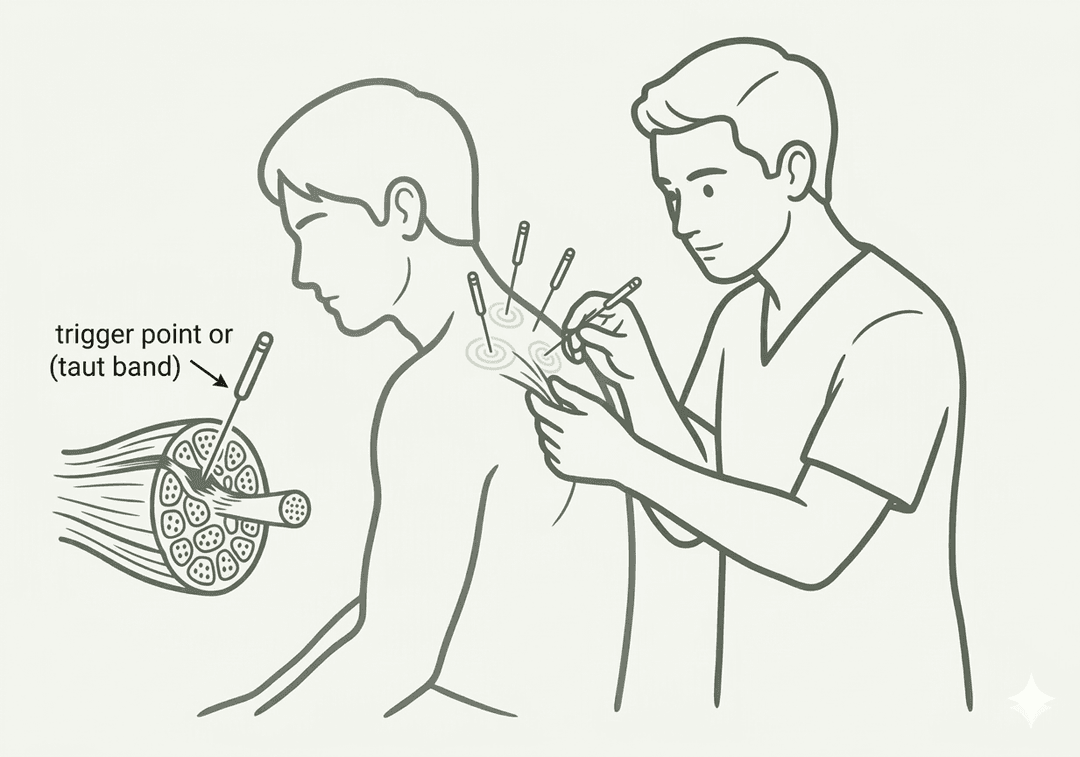
Dry needling is a modern, evidence-informed technique used to help release muscle tension, reduce pain, and restore healthy movement.
It involves inserting very fine, sterile needles into areas of muscular tightness or trigger points, sometimes producing a brief involuntary “twitch response.”
Although inspired by the history of acupuncture, dry needling is grounded in Western medical principles.
Rather than focusing on energy pathways, it targets muscles, nerves, and connective tissue to calm irritation and support natural healing.
Dry needling is often combined with manual therapy, movement retraining, strengthening, and education to support longer-lasting recovery.
Why Dry Needling Helps
Research shows that dry needling can immediately increase range of motion, reduce muscle tone, raise pressure pain thresholds, and decrease pain in people with musculoskeletal conditions.
These benefits arise through several key mechanisms.
Local Twitch Response
A needle inserted into a trigger point may produce a brief, involuntary contraction known as a local twitch response.
This reflex helps to release tension within muscle fibres.
It decreases sensitivity at the trigger point.
It stimulates mechanoreceptors (such as A-beta fibres) that help modulate pain.
This response allows the muscle to reset, soften, and begin functioning more normally.
Improved Blood Flow
Trigger points often restrict blood flow, creating local tightness, ischemia, and reduced oxygen levels.
Dry needling encourages vasodilation—the widening of tiny blood vessels.
This leads to increased circulation.
Improved oxygen delivery.
Reduced inflammatory chemicals.
Enhanced tissue healing.
This supports faster recovery and helps reduce muscle tightness.
Neurophysiological Effects
Dry needling affects both local tissues and the nervous system.
By stimulating sensory and motor pathways, it helps regulate how the brain perceives pain and encourages balance within the nervous system.
This can reduce peripheral sensitisation (increased sensitivity at the tissue level).
It can also reduce central sensitisation (heightened pain processing within the nervous system).
Together, these effects help calm irritation and restore healthier pain responses.
Remote & Systemic Effects
Dry needling can sometimes provide relief beyond the exact site being treated.
Stimulating a trigger point in one region may create analgesic effects in nearby or functionally related muscles.
Although research varies on the extent of these effects, they may support broader movement patterns and enhance overall rehabilitation.
Who May Benefit From Dry Needling?
Dry needling can support recovery for individuals experiencing:
It is one of many tools we may use to help you heal, strengthen, move, and thrive.