TMJ (Temporomandibular Joint) Dysfunction
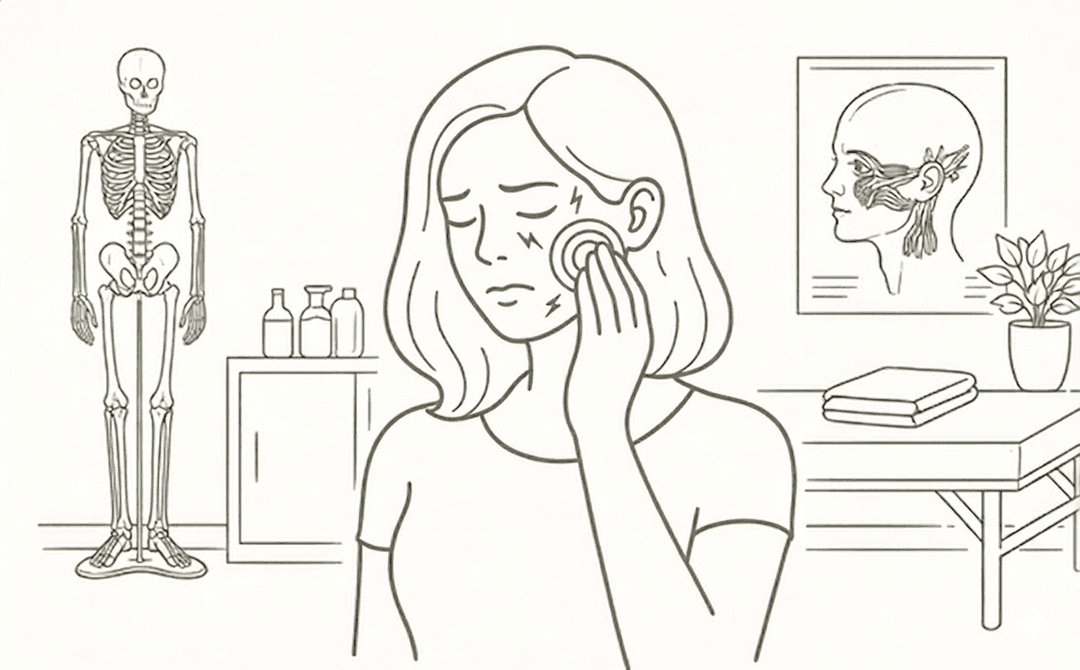
TMJ dysfunction — commonly known as jaw pain — involves conditions that cause discomfort, tension, or restricted movement in the jaw and surrounding areas. These symptoms can interfere with speaking, eating, sleeping, and daily activities.
What Is TMJ Dysfunction?
Your temporomandibular joint (TMJ) connects your jaw to your skull and plays an important role in chewing, talking and facial expression. When the joint or surrounding muscles become tight, irritated or misaligned, you may experience a range of symptoms including:
How Physiotherapy Can Help
Hands-On Techniques for Relief
TMJ Joint Mobilisation
Restores smooth jaw movement, reduces stiffness, and assists with locking.
Soft Tissue & Myofascial Release
Releases trigger points and muscle tension in the jaw, neck, and upper back to ease referred pain.
Dry Needling (when appropriate)
Targets overactive chewing muscles to break the pain cycle and improve muscle coordination.
Low-Level Laser Therapy
May enhance tissue repair, improve circulation, reduce inflammation, and modulate pain.
Jaw Strengthening, Habit Re-Training & Postural Care
Jaw Stabilisation Exercises
Support proper joint alignment and restore efficient jaw mechanics.
Neuromuscular Re-education
Helps eliminate habits like clenching, grinding, or jaw protrusion.
Postural Correction
Reduces strain on the TMJ by addressing forward-head posture and shoulder tension patterns.